Allow foreigners in agriculture sector, government asked

Allow foreigners in agriculture sector, government asked
(BusinessWorld) THE GOVERNMENT should allow foreign investors to develop the country’s agriculture sector to ensure food security, according to various groups and experts.

Foreign companies should be able to bring in investments and technology to develop land in the long term, without owning it, George T. Barcelon, who heads the Philippine Exporters Confederation, Inc. (Philexport), said on Sunday.

“What we lack here in the agriculture sector is investment and technology, but for this to come in, we have to lay the groundwork,” he said by telephone, reacting to the proposal by several local groups.

“Our law has to be fair. We protect the sovereign rights of our lands but they can come in over the long term to invest in facilities and know-how,” he added,

Seven industry groups issued a statement on Saturday calling for the opening up of the sector to foreign trade and investments to lower food prices, ensure food security and create more jobs in the countryside.

They said opening up the sector would allow imports to temper rising food prices because of tight local supply. A more predictable flow of imported goods could also boost investments in other related industries, they added.

“The competition local producers face from imported products has the potential of introducing innovations in local agriculture, needed for stronger and competitive growth,” the groups said.

They were the American Chamber of Commerce of the Philippines, Inc., Cold Chain Association of the Philippines, Inc., Federation of Filipino Chinese Chambers of Commerce and Industry, Inc., Fisheries and Aquaculture Board, Foundation for Economic Freedom, Meat Importers and Traders Association and Philippine Association of Flour Millers, Inc.

“Foreign investments in the sector are necessary to intensify and diversify agricultural production and introduce technologies which would enhance the comparative advantage of the sector’s products,” they said.

“We urge authorities to take an inventory of all laws and regulations which discourage entry of foreign investments in the sector, and take away such unnecessary measures,” they added.

Republic Act 7042 or the Foreign Investments Act of 1991 limits foreign participation in certain sectors. It bars foreigners from owning land, mass media and practicing their professions.

The law also limits to 40% foreign participation in the development and use of natural resources and processing of rice and corn.

Mr. Barcelon said easing foreign investment restrictions could also help attract domestic investments. The government should likewise increase its budget for the agriculture sector.

Raul Q. Montemayor, the national manager of the Federation of Free Farmers, begs to disagree.

“They are more interested in giving incentives to foreign investors than to our own farmers,” he said in a Viber message.

“Foreign investors can just leave us when things go bad. Our own farmers will stay here no matter what happens because they have nowhere else to go.”

President Rodrigo R. Duterte has certified as urgent a bill that seeks to amend the Foreign Investments Act. The measure is part of his administration’s priority list to be passed before his term ends next year… Read More

6 of 10 Pinoys want vaccines made in the US — SWS poll

6 of 10 Pinoys want vaccines made in the US — SWS poll
(BusinessWorld) SIX of 10 Filipinos prefer coronavirus vaccines made in the US, according to a Social Weather Stations (SWS) poll.

The poll, conducted on April 28 to May 2, showed 63% of Filipinos would rather get vaccinated with a shot from the US, followed by China (19%), Japan (13%), Australia (13%), the United Kingdom (13%), Canada (12%) and Russia (12%).

When asked which vaccine brand they preferred, Chinese Sinovac Biotech Ltd. topped the list at 39%, followed by Pfizer, Inc. at 32%, AstraZeneca Plc at 22% and Johnson & Johnson at 10%.

The rest obtained single-digit scores: Moderna, Inc. (7%), CureVac N.V. (3%), Sinopharm Group Co .Ltd.(3%), Novavax, Inc. (3%), Sanofi Pasteur (3%) and Russia’s Gamaleya Research Institute of Epidemiology and Microbiology (2%).

Two percent chose all 10 brands, while 19% did not give an answer.

SWS said 76% of those who chose China as their preferred source of vaccines also selected Sinovac’s CoronaVac.

Majority of those who chose the US as their source of vaccines preferred Pfizer (43%) and Sinovac (41%).

Most of the respondents who chose the United Kingdom as their preferred source chose the AstraZeneca shot.

SWS said Sinovac was the most preferred brand in Mindanao (44%) and the Visayas (44%).

It said respondents in Metro Manila equally preferred Sinovac and Pfizer brands (37%).

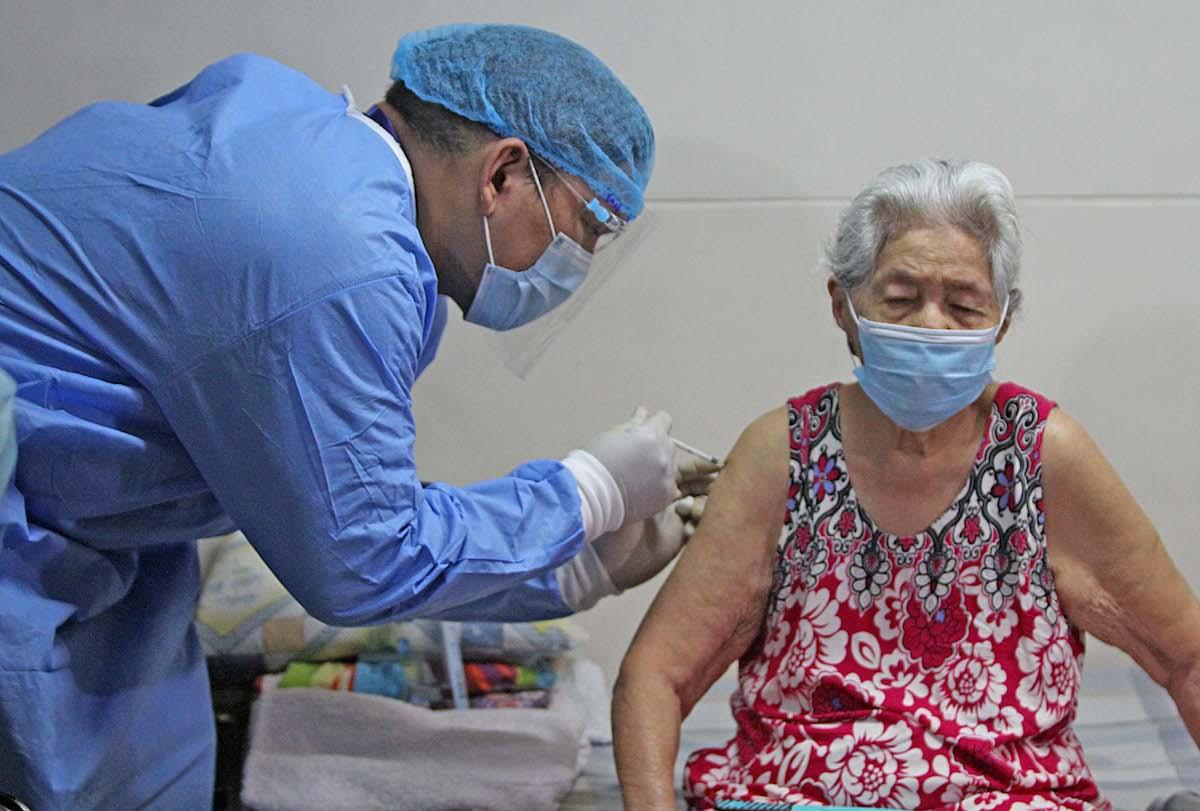
The government had taken delivery of more than seven million doses of vaccines at the time of the poll — about 5 million doses of CoronaVac, 2.5 million doses from AstraZeneca and 30,000 doses of Sputnik V.

A week later, the government took delivery of its initial 193,000 Pfizer doses. SWS interviewed 1,200 adults for the poll, which had an error margin of ±3 points… Read More

Broker gets 14-year sentence for stock price manipulation over 2 decades ago

Broker gets 14-year sentence for stock price manipulation over 2 decades ago
(GMA News) A stockbroker is getting 14 years of jail time after a Pasig court ruled in favor of the Securities and Exchange Commission (SEC) concerning its illegal trade transactions complaint it filed over two decades ago.

In a decision dated May 7, the Pasig City Regional Trial Court Branch 67 found Johnny S. Yap of Solar Securities Inc. guilty beyond reasonable doubt of violation of Section 26(a)(I)(1) of the Revised Securities Act, now Section 24.1(a)(i) of the Republic Act No. 8799 or the Securities Regulation Code (SRC).

Yap was sentenced to 14 years imprisonment and a fine of P1 million.

The court also ordered the issuance of a warrant of arrest against Yap.

The SEC said the Pasig court ruling is the fifth conviction it secured since the SRC’s enactment in 2000.

The court ruling stemmed from a complaint filed by the SEC against Yap, who was then the president, sales manager, and director of Solar Securities, after the brokerage was found to have committed “wash sale” transactions composed of 142 buy and sell orders for stocks of Best World Resources Corporation (BW) during the months of June and October 1999.

Wash sales refer to transactions wherein the buyer and seller of the stock share a beneficial owner, according to the SEC.

A beneficial owner is any person who, directly or indirectly, has or shares voting power, which includes the power to vote, or to direct the voting of, such security; and/or investment returns or power, which includes the power to dispose of, or to direct, the disposition of such security, it said.

The corporate regulator said it formed Special Operations Group (SOG) in August 2000 to investigate the matter and found that Solar Securities’ transactions were wash sales not only because the brokerage was both the buyer and the seller in all the 71 buy order and 71 sell order transactions, but also because the offers and bids were made at very close intervals.

Section 24.1(a)(i) of the SRC states that it shall be unlawful for any person acting for himself or through a dealer or broker, directly or indirectly, to create a false or misleading appearance of active trading in any listed security traded in an exchange or any other trading market by effecting any transaction in such security which involves no change in the beneficial ownership thereof.

The Pasig court ruled that Yap, as Solar Securities’ compliance officer, had the duty to ensure that the company was compliant with the regulations and legal requirements for its trading transactions.

Thus, Yap was deemed to have directly or indirectly executed transactions. Yap also admitted that he himself executed some of the transactions.

Further, the court concluded that the transactions involved no change in the beneficial ownership.

Evidence showed that Solar Securities paid itself at the price it offered to sell the BW shares.

“In fact, no commission was paid and/or earned in all these transactions, which totally negates any appearance that Solar was transacting for its clients,” according to the decision.

Moreover, the court ruled that the transactions were entered into for the “purpose of creating a false or misleading appearance of active trading or misleading appearance with respect to the market of such security.”

BW shares were trading for 80 centavos each at the start of 1999, according to the SEC… Read More

Senate OK’s bill on child sexual abuse

Senate OK’s bill on child sexual abuse
(BusinessWorld) The Senate on Thursday approved on second reading a bill seeking to strengthen the country’s law against sexual abuse of children online.

The Senate approved Senate Bill 2209, which will repeal the Anti-Child Pornography Act of 2009 and amend the Anti-Photo and Video Voyeurism Act of 2009.

The committees on women, science and technology and finance approved the measure on Tuesday.

Senator Risa N. Hontiveros-Baraquel, who endorsed the bill to the plenary, said the bill penalizes the use of digital or analog communications to sexually abuse and exploit children.

Cases of online child sexual abuse almost quadrupled in the Philippines at the height of a coronavirus pandemic from March to May 2020, according to data from the Department of Justice.

The Philippines was also among the top 10 countries that produced child porn in 2016, Ms. Baraquel said in her sponsorship speech, citing a report by the United Nations International Children’s Emergency Fund (UNICEF)… Read More

House panel agrees to adopt Senate two-year estate tax amnesty

House panel agrees to adopt Senate two-year estate tax amnesty
(BusinessWorld) The House committee on ways and means has recommended that the chamber House approve the Senate’s amendments to House Bill 7068, which extends the estate tax amnesty application period by two years from the original deadline of June 14.

June 14 is the deadline stipulated in Republic Act 11213 or the Estate Tax Amnesty Act.

On Sept. 15, 2020, the chamber approved on third reading House Bill 7068, which also called for a two-year extension of RA 11213.

The House later sought to extend it by a further two years, amending the tax amnesty deadline to four years from the original “two years from the effectivity of the Implementing Rules and Regulations of this Act.”

On Thursday, however, the Senate approved on third reading its version of the bill under Senate Bill 2208 which set the new deadline at June 14, 2023.

“This representation poses no objection significant enough to merit the constitution of a bicameral conference committee,” House Committee on ways and means chairman Jose Ma. Clemente S. Salceda wrote in an aide memoire to Speaker Lord Allan Jay Q. Velasco and Majority Leader Ferdinand Martin G. Romualdez, dated May 20 and made public Friday.

Mr. Salceda said the extension is a “vital piece of our COVID-19 bounce back puzzle. The estate tax amnesty will be critical to economic recovery, as it would allow property owners with unsettled estates to access bank financing or to liquidate their property to finance other needs.”

“Having estates settled will unlock the value of such properties and allow credit arising from them to be used to finance economic activities. COVID-19 quarantines also took away significant filing time from potential filers for estate taxes, such that availers did not have full opportunity to complete the estate tax amnesty process for the entire period allowed by the law.,” he added.

The House version of the bill reinstated the provision that only one return may be filed for estates involving multiple generations of decedents, which had been vetoed by President Rodrigo R. Duterte when he signed the act.

The Senate version deleted the provision, but “the President is likely to veto the same provision again if it were kept,” Mr. Salceda said.

The Senate also removed the requirement for heirs to submit “proof of settlement,” which Mr. Salceda said “is immaterial, as the Bureau of Internal Revenue can simply require such proof to be presented if so needed.”.. Read More

PHL shares inch up on bargain-hunting, lower US jobless claims

Image Title
(BusinessWorld) Philippine shares closed the week in the green as investors went bargain-hunting amid the local bourse’s intraday low and after the US released data showing lower initial jobless claims.

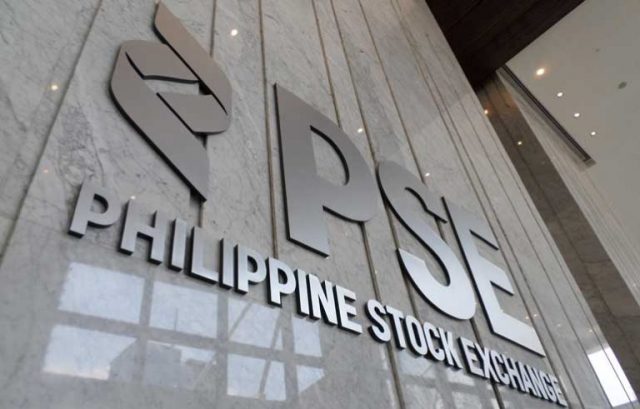
The benchmark Philippine Stock Exchange index (PSEi) inched up by 1.61 points or 0.02% to close at 6,199.25 on Friday, while the broader all shares index increased by 2.42 points or 0.06% to 3,842.73.

“The local bourse managed to close in the green territory this Friday as bargain hunters took advantage of its intra-day dip,” Philstocks Financial, Inc. Senior Research Analyst Japhet Louis O. Tantiangco said in a Viber message on Friday.

“The positive cues from Wall Street’s overnight rally caused by the decline in the US’ initial jobless claims also helped in the local market’s performance today,” Mr. Tantiangco added.

The PSEi dropped to an intraday low of 6,172.18, while the all shares index went down to 3,828.05.

Over in the US, the initial number of people filing for unemployment claims reached 444,000 for the week ending May 15, the lowest level since March of last year.

Most sectoral indices closed in the green on Friday except for financials, which declined by four points or 0.29% to 1,372.47, and services lost 3.49 points or 0.24% to end at 1,453.69.

Meanwhile, property gained 10.61 points or 0.35% to 3,000.93; mining and oil improved by 24.34 points or 0.26% to 9,311.23; holding firms climbed 7.83 points or 0.12% to finish at 6,144.54; and industrials went up by 5.88 points or 0.06% to 8,578.12.

Value turnover inched down to P5.03 billion on Friday with 1.63 billion shares switching hands, from P5.52 billion with 2.97 billion issues traded in the previous session.

Advancers bested decliners, 103 to 95, while 47 names closed unchanged. Net foreign selling went decreased to P512.74 million on Friday from the P731.23 million in net outflows logged on Thursday.

“The index downtrend remains intact and we may continue to test new lows for next week as MSCI rebalancing deadline will be on May 27, and we don’t see any significant positive catalyst to reverse sentiment for now,” AB Capital Securities, Inc. Junior Equity Analyst Lance U. Soledad said in a separate Viber message… Read More

Diokno says BSP in no hurry to adopt digital currency

Diokno says BSP in no hurry to adopt digital currency
(BusinessWorld) The Bangko Sentral ng Pilipinas (BSP) will continue to study the possibility of developing its own digital currency but will seek to build up its capacity to handle digital-currency operations.

“We are developing our capacity to adopt it but we are not in a hurry… at the moment,” Governor Benjamin E. Diokno said during the Institute of International Finance’s Asia-Pacific summit Friday, in response to a question about developing a central bank digital currency (CBDC).

“We remain supportive of financial innovations brought about by technological advancements knowing that new and promising enhancements to the delivery of our mandate may still arise and therefore, we will look at it as we consult with other central banks,” Mr. Diokno added.

The central bank is in possession of the results of a study conducted by a technical working group formed before the pandemic, but he did detail the findings.

Late last year, Mr. Diokno had said the BSP will continue to assess the issue of a digital currency but may not move to issue one within the next five years.

A CBDC is centralized, issued, and regulated by a central bank, and can serve as a medium of exchange or store of value. It is deemed less prone to price volatility unlikeh decentralized cryptocurrencies like Bitcoin.

It may also act as a representation of actual paper-based currency notes. Central banks in China, Sweden, and Singapore are among those considering the issue of CBDCs.

The BSP has cited potential benefits of such an issue, including broader financial inclusion with the decline of bills and coins, additional options for monetary policy action, and heightened competition and innovation in the financial system.

Some of the risks include privacy violations, higher banking costs, money laundering, terrorism financing and other cybersecurity issues.

On the bank’s financial inclusion goals, Mr. Diokno said the BSP retains its target of a 50% share of digital for all financial transactions, and 70% penetration of financial accounts in the adult population by 2023.

“With the pandemic, we will accomplish such goals earlier than originally envisioned, so that may be before the end of 2022,” he said… Read More

Green lane for vaccinated tourists eyed

Green lane for vaccinated tourists eyed
(BusinessWorld) The Tourism department on Friday said it had recommended that a green lane for vaccinated tourists be set up.

“The green lane will pave the way for the reopening of our tourist destinations to leisure travelers who are now fully vaccinated,” Tourism Secretary Bernadette Romulo-Puyat said in a statement.

“It will give the jobs back to many of our tourism workers and gradually revive the tourism industry under safe conditions,” she added.

The agency said it was studying protocols for inbound international travel for people who have been fully vaccinated.

It said some countries have eased border restrictions and opened up major destinations to fully vaccinated foreign visitors.

The Bureau of Immigration has said more international flights might resume in the next few months… Read More