P83.3 billion in wages lost during quarantine

P83.3 billion in wages lost during quarantine
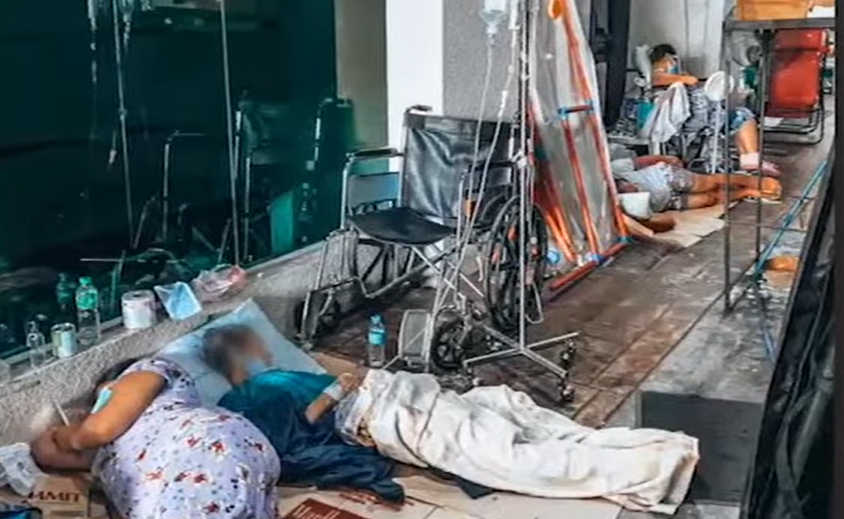
(PhilStar) MANILA, Philippines — Forgone wages during the month-long quarantine restriction are expected to reach P83.3 billion as the government continues to rely on lockdowns to control surging COVID-19 cases.

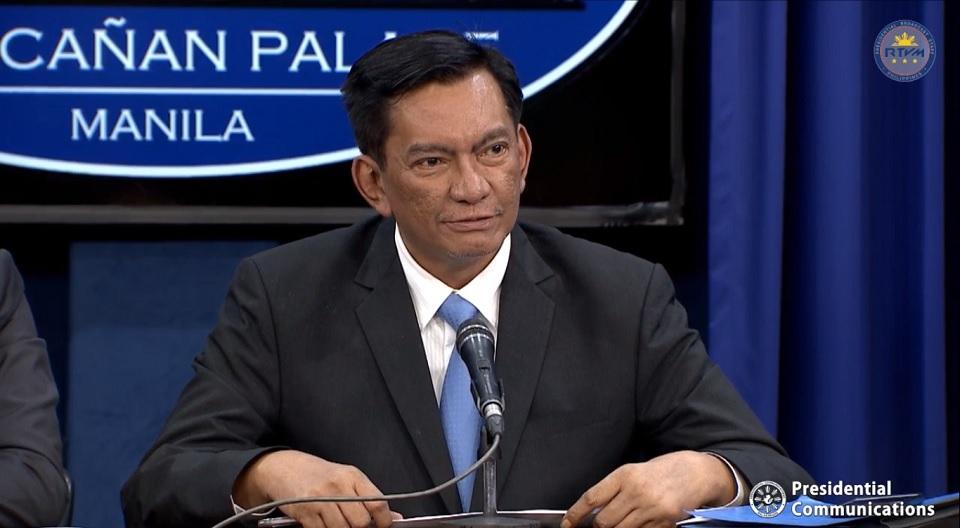
During the Cabinet meeting with President Duterte late Monday night, acting Socioeconomic Planning Secretary Karl Chua said loss of jobs and incomes is the consequence of imposing community quarantines just like last year.

For every week of enhanced community quarantine (ECQ), some P19.6 billion in potential wages are lost as Filipinos cannot go to work.

This means that the two-week ECQ in Metro Manila and nearby provinces last March 29 to April 11 resulted in P39.2 billion in foregone wages.

The ECQ was downgraded to modified enhanced community quarantine (MECQ) starting April 12 and will last until April 30.

At least P14.7 billion is being lost for every week of MECQ, bringing total losses to P44.1 billion for the three-week period.

“That is a total of five weeks and the effect of that is P83.3 billion in foregone wages and, of course, this is one of our concerns,” Chua said.

“But we need to help each other to solve this COVID-19 spike so that we can slowly open the economy again and bring back jobs and incomes of people,” he said.

Unemployment rate remains high and even rose to 8.8 percent in February, accounting for 4.2 million unemployed Filipinos in the labor force.

Chua said there has already been a significant improvement in the job market prior to the recent spike in cases, compared with 8.7 million jobless Filipinos last year.

“We opened the economy in the safest possible manner and recovered the lost jobs last year. This is very important as this is what runs our economy,” he said.

NEDA is targeting to bring back the unemployment rate to its pre-COVID level at four to five percent by next year… Read More

Pfizer, Moderna vaccines seen to arrive in May, June

Pfizer, Moderna vaccines seen to arrive in May, June
(PhilStar) MANILA, Philippines — Vaccines developed by the United States could arrive in the country in the next two months, Manila’s envoy to Washington said Tuesday.

A vast majority of the Philippines’ supply of COVID-19 jabs remain from China’s Sinovac, while some 525,600 doses of AstraZeneca arrived in March from the global initiative COVAX facility.

In a Palace briefing, Ambassador Jose Manuel Romualdez said Moderna gave a target date of June 15 for an initial 200,000 doses. A supply agreement for 20 million doses was signed in March, but there has been no word on a final purchase deal.

“I think they’re quite confident that they will be able to [roll in[ the vaccines,” he said. “Then, it will start increasing in succeeding months…they will complete the 20 million before the end of the year.”

Moderna is taken in two doses, and has reported an efficacy rate of 94%. Regulators in the US also approved it for emergency use in late 2020, but it has yet to apply for the same in the Philippines… Read More

LIST: Pinoy celebrities infected by COVID-19

Pinoy celebrities infected by COVID-19
(PhilStar) MANILA, Philippines — More than one year after the COVID-19 pandemic struck the country, celebrities were among those that have fallen victims to the deadly virus.

Iza Calzado, Michael V, Christopher de Leon, Sylvia Sanchez, Dennis Padilla, K Brosas, Angeline Quinto, Rhian Ramos, Donita Nose, Angeli Valenciano, Claire dela Fuente, Ted Failon, Cherry Pie Picache, Joseph Estrada, Heaven Peralejo, Lloyd Cadena, Joel Lamangan, Sunshine Cruz, Nikki Valdez… Read More

Philippines: Giant clam shells worth $25m seized in raid

Philippines: Giant clam shells worth $25m seized in raid
(BBC) Around 200 tonnes of illegally harvested giant clam shells worth nearly $25 million (£18 million) have been seized in the Philippines.

The seizure is one of the largest ever hauls of the endangered species. Four suspects have been arrested on an island in the ecologically protected province of Palawan. Giant clams can grow larger than one metre across, and weigh up to 250kg. They are seen as vital to the local marine ecosystem.

The Philippines is home to most of the world’s giant tropical clam species. Jovic Fabello, spokesman for the Palawan Council for Sustainable Development, said that the seized shells included Tridacna gigas, the world’s largest clam.

“Taking the giant clams from their natural habitat is a form of inter-generational crime,” he told the AFP news agency.

“It will permanently affect the marine ecosystem and future generations will be deprived of the benefits accruing from it,” he added.

Tridacna gigas contain marine algae which are a food source for many of the fish species eaten by humans. They are increasingly vulnerable to poaching, both for their meat and shells, which are used as a replacement for ivory in jewellery and decorations.

In the Philippines, killing endangered species can lead to prison sentences of up to 12 years and fines of up to a million pesos (£15,000)… Read More

Chef of groundbreaking Filipino pop-up Pinoy Heritage is opening a new San Francisco restaurant

Chef Francis Ang prepares courses at a Pinoy Heritage pop-up in San Francisco in 2019
(SFChronicle) Francis Ang, who has been at the forefront of the Bay Area’s modern Filipino food scene for years with his pop-up Pinoy Heritage, is opening his first full-blown restaurant this spring in San Francisco.

Billed as a contemporary Filipino-Californian restaurant, Abacá will reside inside the Kimpton Alton Hotel, a new boutique hotel opening in May near Fisherman’s Wharf. Abacá is slated to open shortly after the hotel’s debut.

While San Francisco is home to a number of traditional Filipino spots and creative pop-ups, Abacá will likely be the city’s first higher-end Filipino restaurant. It’ll feature some well-loved dishes like sisig fried rice from Pinoy Heritage’s pop-ups, which included inventive sit-down tasting menus, traditional kamayan feasts and casual bites at breweries.

The range demonstrated by the pop-ups will show up at Abacá, too. It will serve homemade noodles such as crab pancit and grilled skewers inspired by Filipino street carts, such as local asparagus with salted duck egg gribiche. There are also fried snacky items like vegetarian lumpia that would pair well with a cocktail. And entrees such as crispy octopus with cherries and rib eye bistek with preserved calamansi could be served family-style or coursed out for individual meals.

The restaurant will also serve breakfast daily with Filipino baked goods such as ensaymada, a flaky pastry that’ll come in both savory flavors, such as salted egg, and sweet ones, like ube. Espresso drinks will get a special touch; a roasted white chocolate flat white brightened with yuzu. Weekend brunch blending Filipino flavors with classic American staples is also in the works.

Before starting Pinoy Heritage in 2015, Ang worked at San Francisco fine dining restaurants like Gary Danko and now-closed Fifth Floor, gaining national attention for his pastry skills. With Pinoy Heritage, The Chron.. Read More

Erap turns 84 – and he’s out of ICU

Erap turns 84 – and he's out of ICU
(Rappler) MANILA, PHILIPPINES The former president, a COVID-19 survivor, is back in a regular room following his bout with a bacterial lung infection. On Monday, April 19, former Philippine president Joseph “Erap” Estrada marked another birthday in his life with good news: he has been moved out of the intensive care unit (ICU) following his bout with a bacterial lung infection.

His son, former senator Jinggoy Estrada, confirmed to Rappler that his father, now 84 years old, had been transferred to a regular room.

Erap was first moved out of the ICU on April 14 after testing negative for COVID-19, but Jinggoy said on April 16 that his father was transferred back to the ICU due to a bacterial lung infection… Read More

COVID-19 alert in Vanuatu after body of Pinoy seaman found on beach confirmed to have virus

COVID-19 alert in Vanuatu after body of Pinoy seaman found on beach confirmed to have virus
(GMA News) PORT VILA, Vanuatu — Vanuatu slapped travel restrictions on its most populous island Monday after tests confirmed a body that washed ashore on the largely coronavirus-free Pacific nation was infected with COVID-19.

Government sources said the deceased was a Filipino sailor whose vessel had left Port Vila a day before his body was found washed up near a village about five kilometers (3.1 miles) outside the city on Sunday 11 April.

The man’s crewmates and police officers who retrieved the body had all tested negative for the virus, said the sources, who wished to remain anonymous as they were not authorized to discuss the matter. It was not clear how or where the man died, or how his body ended up in the sea.

The Pacific island nation has recorded only three coronavirus cases, all in arriving travelers, and the National Disaster Management Office said it was taking steps to ensure there was no transmission among the population of 200,000… Read More

Bank account for each Pinoy a must – senator

Bank account for each Pinoy a must – senator
(Manila Standard) To ensure the prompt delivery of future government financial assistance programs, Senator Win Gatchalian has broached the idea of having each Filipino owning one bank account.
“Now we already have the national ID. I want to file a bill related to the national ID, which I will call “One Filipino, One Bank Account,” Gatchalian said.
He said it should be mandatory for the government to give everybody in the country a bank account. It is important we use technology.
During this pandemic, he said, the government should just remit the financial help to the bank account.
“Even the people dispensing the cash might get infected with COVID-19. Who will then dispense the money?” Gatchalian said.
The Vice chairman of the Senate Committee on Banks, Financial Institutions and Currencies says owning a bank account should be considered a basic requirement among Filipinos regardless of the individual’s socio-economic class.
And with over 74 million Filipinos already using smartphones as of 2019, Gatchalian said, contactless and cashless payments could be made possible through the use of their mobile phone units as digital wallets.
Through the use of software applications installed in smartphones, payments could be made through scanning or card readers…. Read More