Landbank agriculture loans reach P230 billion in Q1

Landbank agriculture loans reach P230 billion in Q1
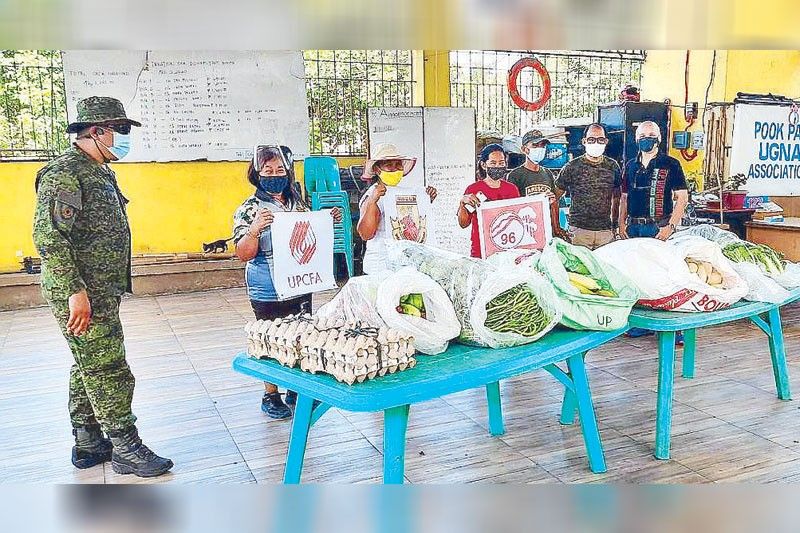
(PhilStar) MANILA, Philippines — Government-owned Landbank of the Philippines lent P229.7 billion to the agriculture sector as of the end of the first quarter.

Of the P229.70 billion in total outstanding loans to the agriculture sector, P36.27 billion benefitted small farmers and fishers, cooperatives and farmers’ associations, rural financial institutions and other conduits.

Landbank said small, medium, and large agribusiness enterprises were granted P143.11 billion in loans, while P50.32 billion was channeled to support agri-aqua related projects of local government units (LGUs), as well as those of government-owned and controlled corporations (GOCCs).

A total of 2.7 million farmers and fishers nationwide were assisted by Landbank as of end-March.

Landbank president and chief executive officer Cecilia Borromeo assured agriculture stakeholders of the bank’s continued efforts to address emerging challenges and issues faced by clients in accessing agricultural credit amid the COVID-19 pandemic.

“We welcome the issues raised and suggestions gathered from clients during the focus group discussions, and we commit to provide direct and time-bound solutions. Listening to the voice of the customer is high on our agenda as it helps us improve the delivery of our products and services,” Borromeo said during the culmination of Landbank’s online stakeholders consultation forum last week.

Last month, Landbank launched its online stakeholder’s consultation forum as a venue for knowledge sharing on concrete actions to help the bank improve the accessibility of its lending products and services, especially under the new normal.

“Online survey and focus group discussions were conducted to gain insights and suggestions from farmers and fishers, agri-input suppliers, aggregators and traders, processors and wholesalers and exporters,” Landbank said.

As part of its offerings to the agriculture sector, Landbank is doubling the available loan facility to support local hog producers and feed millers to P30 billion to finance stock repopulation and feed milling operations of stakeholders reeling from the adverse impact of the African swine fever.

The funds will be available through the Landbank SWINE (Special Window and Interim Support to Nurture Hog Enterprises) Lending Program for commercial hog raisers registered as cooperatives or farmers’ associations, small and medium enterprises (SMEs) and large enterprises or corporations… Read More

Philippines imposes travel ban on travelers from India

Philippines imposes travel ban on travelers from India
(GMA News) The Philippines has imposed a travel ban on all travelers from India amid the deadly resurgence of the COVID-19 in the South Asian country, presidential spokesman Harry Roque has said.

Also prohibited from entering the country are those who have travel to India over the 14 days. The ban will begin at 12:01 a.m. on April 29, 2021 and will last until May 14.

Passengers already in transit and who will arrive before Thursday shall not be included in the travel restrictions.

“Restrictions as to travelers coming from other countries that report the new strain may be imposed by the Office of the President upon the joint recommendation of the Department of Health (DOH) and the Department of Foreign Affairs,” Roque said.

The Department of Transportation was also directed to ensure that airlines will not allow the boarding of passengers from entering the Philippines unless part of repatriation efforts by the government.

India’s coronavirus death toll neared the bleak milestone of 200,000 with another 2,771 fatalities reported on Tuesday, while its armed forces pledged urgent medical aid to help battle the staggering spike in infections.

Over the past 24 hours, India recorded 323,144 new cases, slightly below a worldwide peak of 352,991 reached on Monday, with overrun hospitals turning away patients due to a shortage of beds and oxygen supplies.

Two Filipinos have died in India due to COVID-19.

According to the DOH, the variant from India was first detected in October 2020.

However, experts have said the surge in India was largely driven by a new coronavirus variant described as a “double mutant” due to its mutations.

The DOH also said that the variant was classified as a variant under investigation and not a variant of concern based on the definitions set by the World Health Organization.

Foreign Affairs Secretary Teodoro Locsin earlier said he had recommended that the government impose a temporary ban on travelers from India… Read More

NKTI patients lie on floor at hospital driveway due to full wards, tents

NKTI patients lie on floor at hospital driveway due to full wards, tents
(GMA News) Some patients at the National Kidney and Transplant Institute have been lying on the floor at the driveway of the government hospital after it had been filled to capacity over the past several days.

According to Raffy Tima’s report on “24 Oras”, photos showed patients and their companions lying on cartons with wheelchairs and oxygen tanks nearby.

Dr. Rose Marie Rosete-Liquete, executive director of NKTI, said even the hospital tents were already at full capacity.

She said the emergency rooms were also overwhelmed since COVID-19 cases continued to surge.

“Even our emergency room, we partially closed it because we have to put some negative pressurization at the exhaust,” Liquete said in an interview with Super Radyo DZBB.

“That is one of the reasons why until now there are still many patients positive for the virus instead of negative, compared to last year. So they cannot go inside. They still wait for swab testing,” she added.

“These patients know that we are already at full capacity, this means they are waiting,” Liquete said.

Liquete said patients chose to wait for medical treatment at NKTI for fear that other hospitals might reject them.

“Mostly are in wheelchairs. We can’t place a cot bed. We have many watchers but of course some Filipinos have more than one watcher. And these watchers take up more space,” Liquete said.

“Even if they know we are already full, they are still waiting because hospitals might refuse them,” she added.

The NKTI chief said there were also fewer nurses because some had resigned while others had been isolated due to infection with COVID-19.

This resulted in the closure of three COVID-19 wards, Liquete said.

Health Chief Francisco Duque III said the Philippine Red Cross sent 20 to 25 additional tents to augment NKTI’s facilities and to give a more comfortable waiting room for patients… Read More

PNP virus death toll rises to 53

PNP virus death toll rises to 53
(PhilStar) MANILA, Philippines — Another police officer succumbed to COVID-19 over the weekend, bringing to 53 the number of deaths among Philippine National Police (PNP) personnel.

The PNP’s Administrative Support for COVID-19 Task Force said the 54-year-old police officer died on Saturday. He was assigned at the Maritime Group.

The PNP recorded 141 new cases of COVID-19. Of the number, three had tested positive for the virus for the second time.

Most of the infections came from the police regional offices with 111, national operational support units with 18, PNP national headquarters with one and national administrative support units with 11.

The PNP said 43 police officers from Central Luzon contracted the virus; 19 from Metro Manila; 15 from Mimaropa; 13 from Calabarzon; four each from Western Visayas and Northern Mindanao; three each from Ilocos, Caraga and Cordillera, and one each from Bicol, Zamboanga Peninsula, Davao and Soccsksargen.

The PNP registered a total of 19,536 COVID-19 cases with 17,418 recoveries. There were 2,065 active cases.

A total of 10,844 police personnel have received their first dose of COVID-19 vaccines… Read More

DOST-FNRI to launch ‘new variant’ of enhanced nutribun

DOST-FNRI to launch ‘new variant’ of enhanced nutribun
(GMA News) The Department of Science and Technology-Food and Nutrition Research Institute (DOST-FNRI) on Monday said it will launch a new variant of its nutribun, which will aid in feeding programs and increase demand for vegetable farmers.

The new variant of the enhanced nutribun is made with carrots that have natural fiber and no artificial flavor and color. The new variant also provides “energy, protein, vitamin A, iron, calcium, potassium, and zinc in significant quantities recommended for children.”

“This coming April 28, 2021 via Zoom, a new ‘variant’ of Enhanced Nutribun will be launched–the Enhanced Nutribun with Carrots,” the DOST-FNRI said in a statement.

A serving of the nutribun contains 500 kilocalories, 18 grams of protein, 6 milligrams of iron and 350 micrograms (ug) of vitamin A.

It also provides 31% of energy, 59% of protein, 60% of iron, and 90% of vitamin A, which is the recommended energy and nutrient intake of the Philippine Dietary Reference Intake (PDRI) for a male child aged six to nine years old.

The department, likewise, invited manufactures and bakeries to adopt the recipe of enhanced nutribun to make it available to children nationwide.

“The DOST-FNRI is inviting adopters of the first variant of Enhanced Nutribun, bakery companies and even bakeries in communities to become adopters of the Enhanced Nutribun with Carrots technology to make it more available to consumers nationwide,” the department also said in its press statement.

The enhanced version of nutribun, which is also made of crushed squash, was first launched in 2020 to address malnutrition issues amid the COVID-19 pandemic… Read More

House panel seeks stronger enforcement of excise tax to curb smuggling

House panel seeks stronger enforcement of excise tax to curb smuggling
(GMA News) The House committee on ways and means will continue exerting pressure to implementing agencies to ensure strict enforcement of excise taxes expected to curb smuggling and tax evasion, its chairman Albay Rep. Joey Salceda said Monday.

Salceda made the remarks after the committee’s approval of the House Resolution 227 which directs the panel to determine the issues in implementing excise tax on sweetened drinks and assess accomplishment of the legislative intent on earmarking of funds to sugar farmers.

“Because this is no time to raise new consumption taxes, we should catch those who escape current taxes so that we can fund our COVID-19 response,” Salceda said in a press statement.

He added that he is also pushing for strengthening tax enforcement as well as passing new taxes.

The committee is also calling for the stronger enforcement of excise taxes on sweetened beverages, which took effect on January 1, 2018 under Tax Reform for Acceleration and Inclusion (TRAIN) Law, Salceda said.

Citing its probe on the matter, the House panel discovered a significant deficit in target tax revenues due to industry shift from the use of high-fructose corn syrup (HFCS).

However, the committee said the deficit cannot be blamed solely on the industry shift because of other factors such as administration and implementation of taxes.

The House inquiry also found that tax revenues to fund programs of sugarcane farmers under the Sugarcane Industry Development Act (SIDA) was not properly enforced as there is low absorptive capacity or capacity to use public funds of the Sugar Regulatory Administration (SRA).

The House committee also recommended the following to enhance revenue collection and administration:

1. Agency audits of the implementation of the sweetened beverage excise tax;

2. Validation of Bureau of Internal Revenue (BIR) beverage product registration and exemption;

3. The creation of a database of accurate import statistics of HFCS;

4. Improvement of Food and Drug Administration (FDA) product testing and implement FDA post-marketing surveillance;

5. Amendment of the FDA mandate to include the evaluation of products;

6. Improvements in the absorptive capacity of the SRA to deliver programs to develop the sugar industry; and

7. The submission by concerned agencies (FDA, SRA, Department of Finance and Bureau of Customs) of periodic status reports to the Committee for proper monitoring of deliverables.

This investigation resulted in Food and Drug Administration’s speeding up of procurement of High-Performance Liquid Chromatography (HPLC) equipment to heighten its capacity to verify manufacturer’s claims on sweetener content of products subject to the SB excise tax… Read More

Philippines sees ‘accelerated’ vaccine deliveries

Philippines sees ‘accelerated’ vaccine deliveries
(PhilStar) MANILA, Philippines — The country is expecting the delivery of COVID-19 vaccines to be supplied by the COVAX Facility as early as next month, composed mostly of what the government said were delayed batches, the National Task Force (NTF) Against COVID-19 said yesterday.

NTF chief implementer and vaccine czar Carlito Galvez Jr. said about seven million to eight million doses could be delivered in May.

“We will be having what we call accelerated deliveries this coming May and June. This coming May, maybe we can have about seven to eight million. We are just waiting because there were delays with COVAX,” Galvez said in an interview aired over Teleradyo.

Last month, Galvez announced a delay in the delivery of COVID-19 vaccines to be supplied by the World Health Organization-led COVAX, citing logistical issues faced by vaccine manufacturing companies in countries where they are situated, like the Serum Institute of India, which had to address new waves of infections in the South Asian country.

COVAX is a global initiative that seeks equitable access to COVID-19 vaccines for member countries.

Galvez said the global production and delivery of vaccines in Europe was also affected, but that the constrictions in vaccine production are expected to stabilize in June.

“We are just waiting for the delayed supplies because, with the COVAX (batches), had there been no delays, we could have gotten over six million (doses) of Pfizer and AstraZeneca,” he explained.

“That’s what we’re waiting for. Just in case we can have other supplies from COVAX, it’s going to reach, before the end of June, we can get more or less 10 to 15 million (doses),” Galvez said.

The Philippines is currently administering the China-made CoronaVac vaccine, and British drugmaker AstraZeneca’s vaccine. Galvez said the country hopes to have a portfolio of at least seven vaccine brands this year.

Meanwhile, the NTF also announced that the shipment of 15,000 doses of Gamaleya Institute’s Sputnik V vaccine, which was scheduled to arrive Sunday, has been pushed to Wednesday due to “logistical reasons.”

At least one to two million doses of Sputnik V are also expected to be shipped next month, with two million more expected in the next delivery in June. Sinovac is also expected to deliver two million doses next month and 4.5 million in June.

Galvez earlier said Pfizer—whose scheduled delivery of vaccines to the country last month was snagged by the lack of an indemnity clause—is expected to deliver 195,000 doses by the end of the month.

He said an initial 194,000 doses of Moderna vaccine could “hopefully” arrive next month.

The government is also looking to secure negotiations soon for five to 10 million doses of Johnson & Johnson’s COVID-19 vaccine.

The government’s total vaccine budget for this year is P82.5 billion, coming from Bayanihan 2 funds, total unprogrammed appropriations, and funds from the Department of Health—with the aim of vaccinating 50 to 70 million Filipinos by the end of the year.

Galvez said the country has inoculated at least 1.06 million out of 1.7 million health workers, over 200,000 out of nine million senior citizens, and about 228,000 out of 14 million Filipinos with comorbidities… Read More

This Small Island in Cebu Is the Perfect Detour on Your Next Trip

This Small Island in Cebu Is the Perfect Detour on Your Next Trip
(SPOT.ph) Olango Island has always been known as a birdwatcher’s paradise. But there’s more to this little island in Cebu than the migratory birds. It’s close enough for a day trip, but it can also be a destination on its own. It’s budget-friendly as long as you’re willing to rough it in a sleeping bag—bring your own, though—but also, familiar enough with the conveniences of city life. Whatever your traveling style is, just be sure to take a fully charged power bank with you!

From Cebu City, find your way to Angasil Port in Mactan Island, Lapu-Lapu City. You can either take a cab or a Grab. At the port, there’s always a pumpboat on standby, waiting to take you to Olango Island’s Santa Rosa port for P30 per head, plus terminal fee (approximately P10). The frequency of trips might depend on the number of passengers or the return trip of the other boats, so the schedule isn’t set in stone. If you’re lucky, it’ll be ready to leave the moment you take your seat. Otherwise, you might have to wait quite a bit. The boat ride itself is approximately thirty minutes.

If you’re taking your own car, head to the Hilton Wharf for a RORO instead. There are trips every hour. Do note that on your way back, taxis may be scarce. Take a tricycle to Mactan Newtown and try your luck there instead… Read More